Intelligent Decision Tools
A web app that guides users through complex financial planning decisions using an interactive, AI-driven question and answer process.
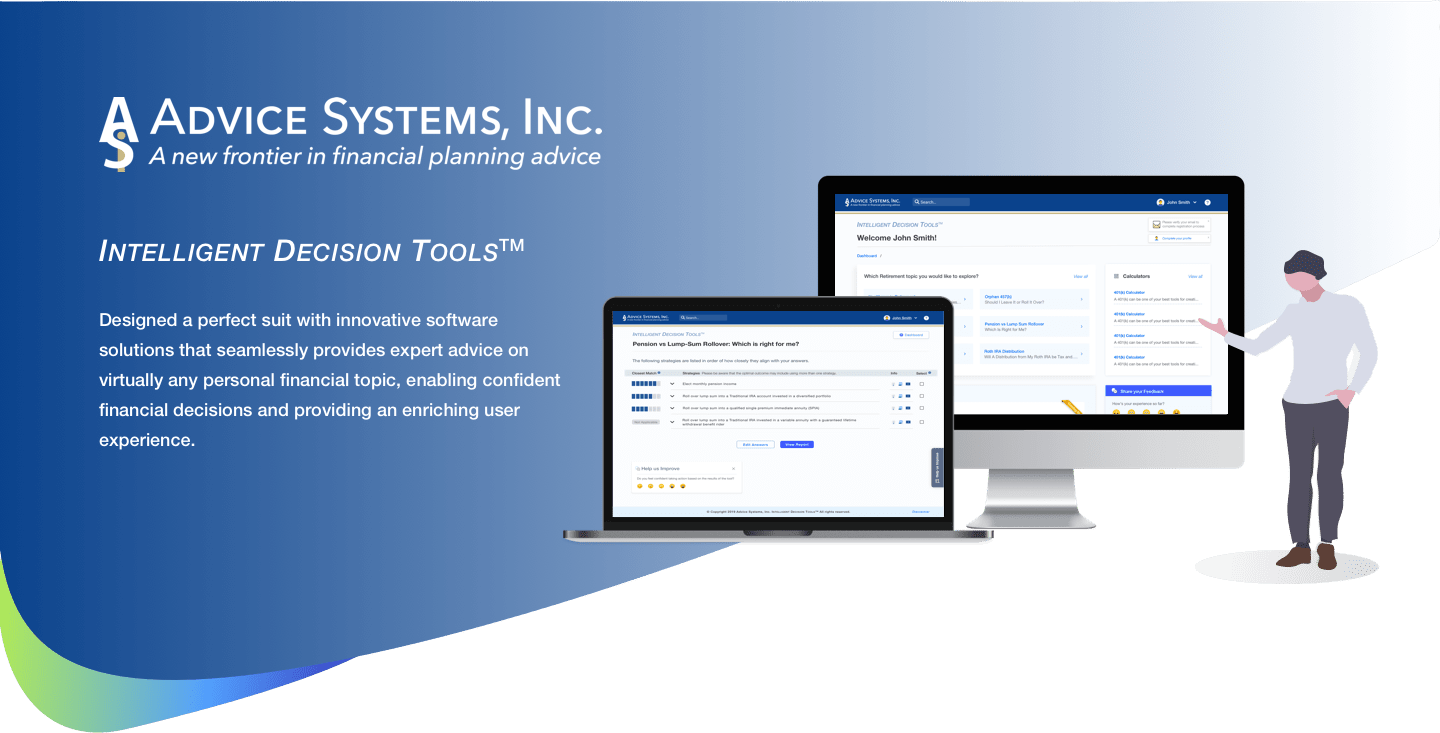
A web app that guides users through complex financial planning decisions using an interactive, AI-driven question and answer process.
Genuine financial advice is out of reach for most people. A $300/hr advisor appointment is not a realistic option for someone wondering whether to roll over their 401(k) or how to structure a college savings plan. So they either guess, or they go without. Both outcomes cost them.
On the advisor side, the problem was different but just as real. Financial planners were spending hours every week on manual work, chasing clients via email, building reports by hand, managing follow-ups through spreadsheets. Time that should have gone toward advising was going toward administration.
Competitive analysis of eMoney, MoneyGuide, and TurboTax revealed consistent failures across all of them:
Interviews with financial advisors surfaced the manual work problem clearly: reporting, reminders, and client follow-up were consuming the majority of their non-client time.
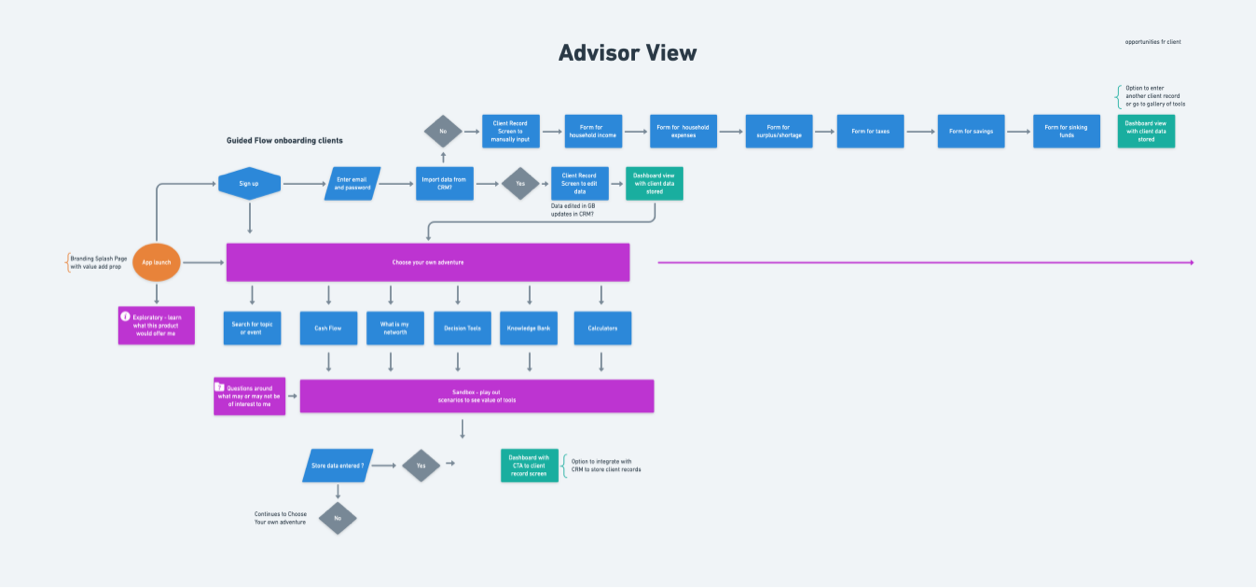
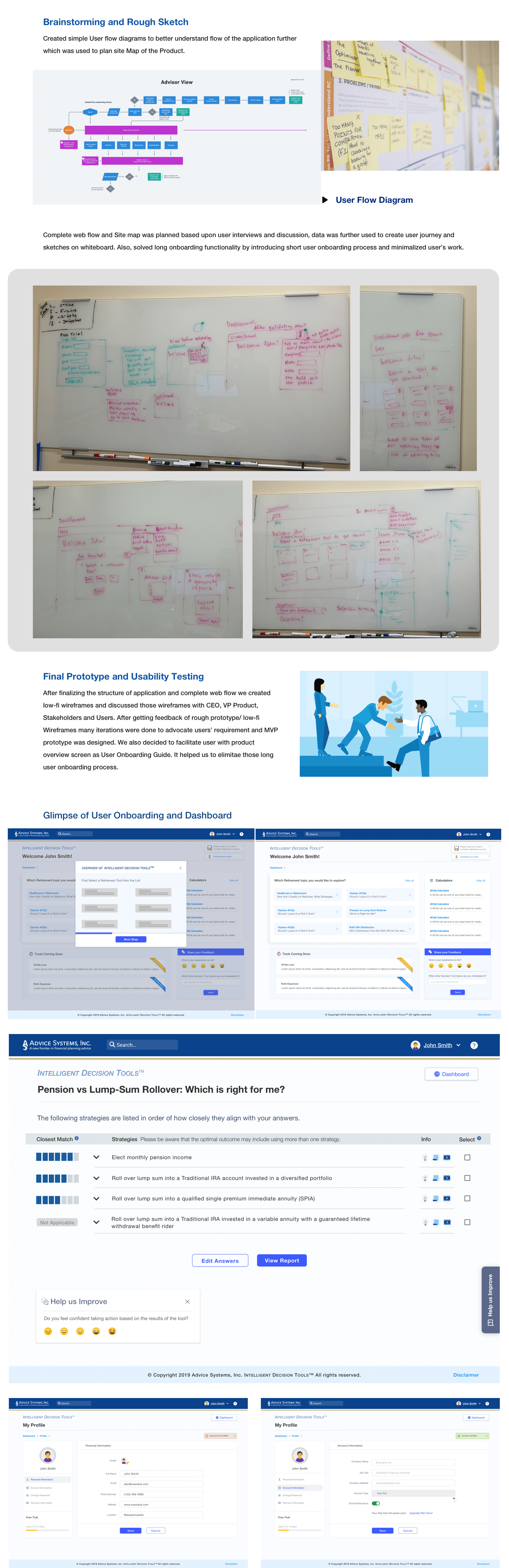
Advisor-side user flow and site map planning
The opportunity was to solve both problems together. Consumers needed an experience that felt like talking to a knowledgeable friend, not filling out a form. Advisors needed their repetitive work automated so they could focus on what they were actually hired to do.
Designing for two very different mental models in a single product was the core design challenge. The consumer flow needed to feel conversational and progressive. The advisor portal needed to feel like a professional tool, not a consumer app.
The consumer experience was designed as an interactive, AI-driven Q&A flow. Questions surface progressively based on the user's situation, so the experience feels tailored rather than generic. A short onboarding walkthrough was added after early testing showed users needed orientation before they could engage confidently, eliminating the "where do I start" drop-off entirely.
The advisor portal gave planners a unified view of their clients, automated report generation, and built-in reminder workflows, cutting the manual administration that was consuming hours of their week.
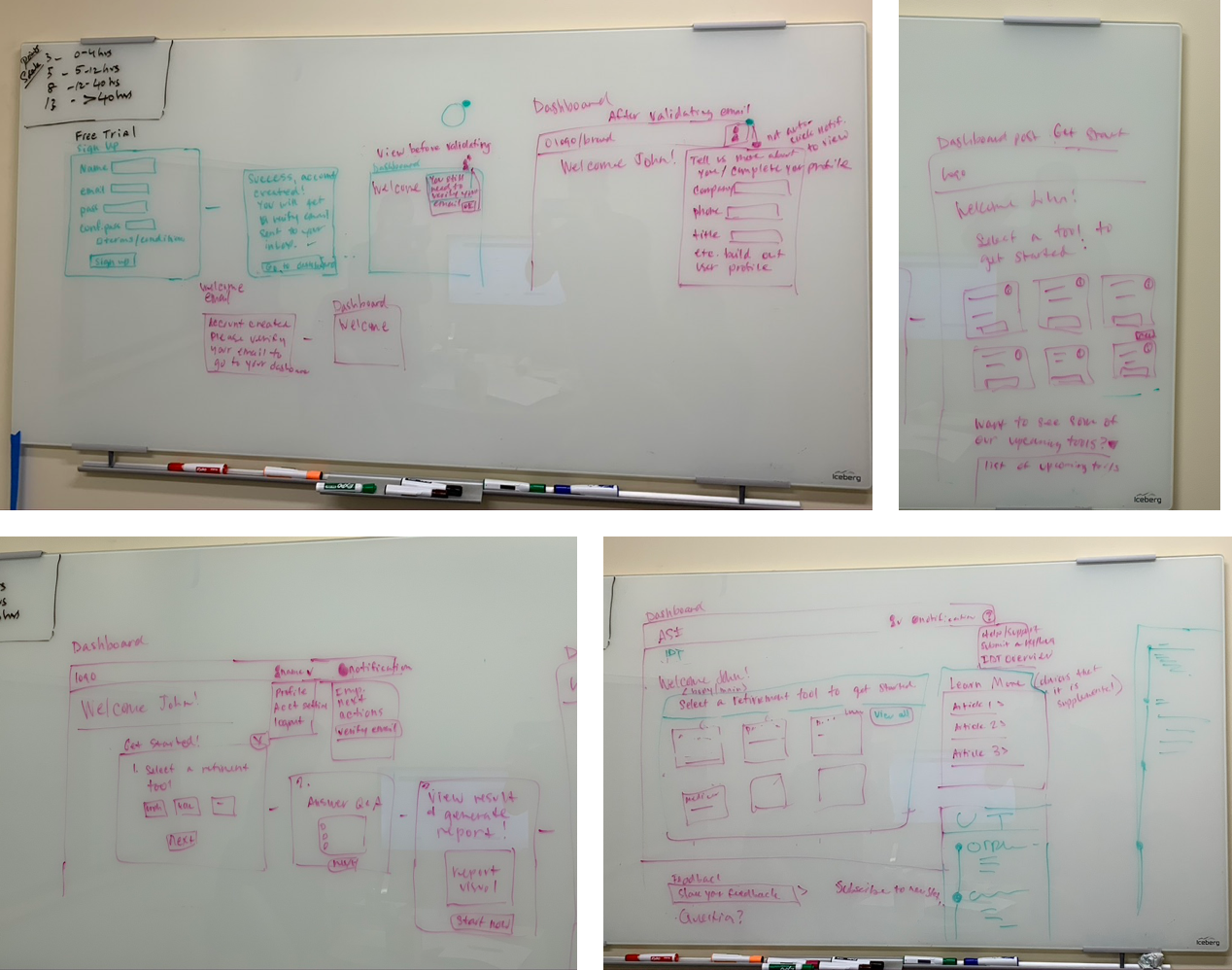
Whiteboard sketches exploring the consumer Q&A flow
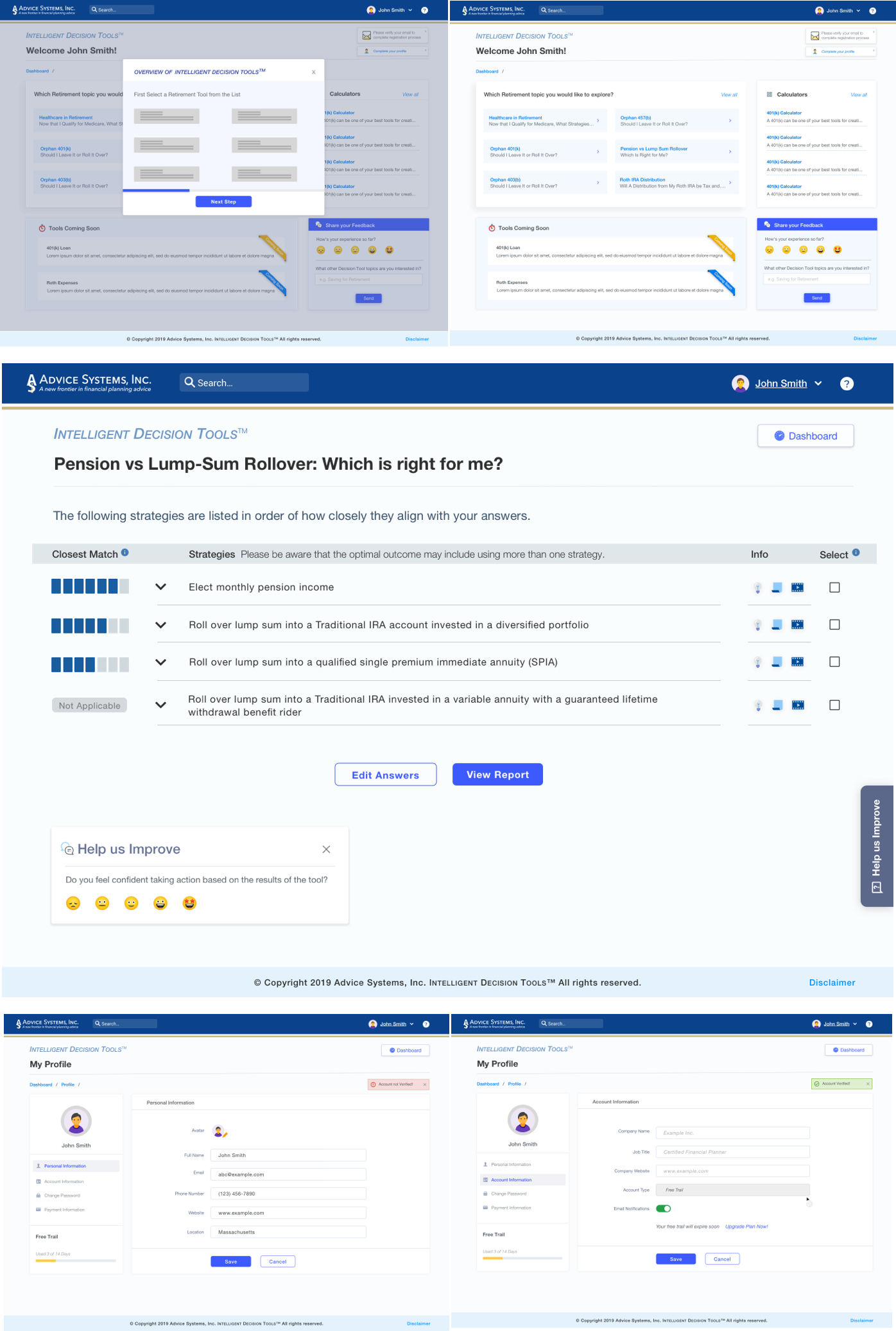
Rough wireframes reviewed with stakeholders and users
Financial advisors adopted the portal as their primary client management tool. Automated report creation and reminder workflows eliminated the manual overhead that had been consuming their time. The product was used in sales demonstrations and directly contributed to closing new business deals for Advice Systems.
Designing across two distinct user types in a single product taught me how to hold different mental models simultaneously without letting one bleed into the other, and how to run a design sprint cycle with cross-functional teams including subject matter experts, content, and engineering.